If you have ever paid a booking fee for a new launch and then wondered what happens to it if you change your mind, or if the developer quietly shelves the project, the Housing and Local Government Ministry (KPKT) is working on an answer. Minister Nga Kor Ming said on 14 October 2026 that the ministry is studying an option-to-purchase (OTP) mechanism under which you could pay up to 5% of a home's proposed price before you sign the sale and purchase agreement, and get all of it back with accrued interest if the developer decides not to go ahead (EdgeProp).
The sale and purchase agreement, or SPA, is the binding contract. Today, by the time you sign it, you are committed, and so is your deposit. The OTP would sit in front of that: a defined window in which the developer finds out how many serious buyers it really has, and you find out whether your loan will go through, before either side is locked in.
Five rules in the 5% proposal
From the ministry's statement, as reported by EdgeProp and FMT:
- You could pay up to 5% of the proposed purchase price at the option stage.
- You could submit your financial details at the same time, so the loan assessment starts early.
- The developer gets a specified period to judge demand before deciding whether to proceed. The length of that period has not been announced.
- If the developer does not proceed, you get a full refund plus accrued interest.
- The developer must honour the indicative price it first offered you, so the price cannot creep up between the option and the SPA.
Here is what up to 5% would mean in ringgit at three common price points:
| Home price | Maximum option payment (5%) |
|---|---|
| RM300,000 | RM15,000 |
| RM500,000 | RM25,000 |
| RM750,000 | RM37,500 |
That is real money to tie up, which is why the refund-with-interest promise and the locked-in price are the parts to read closely when the rules come out.
Booking fees and abandoned projects are the target
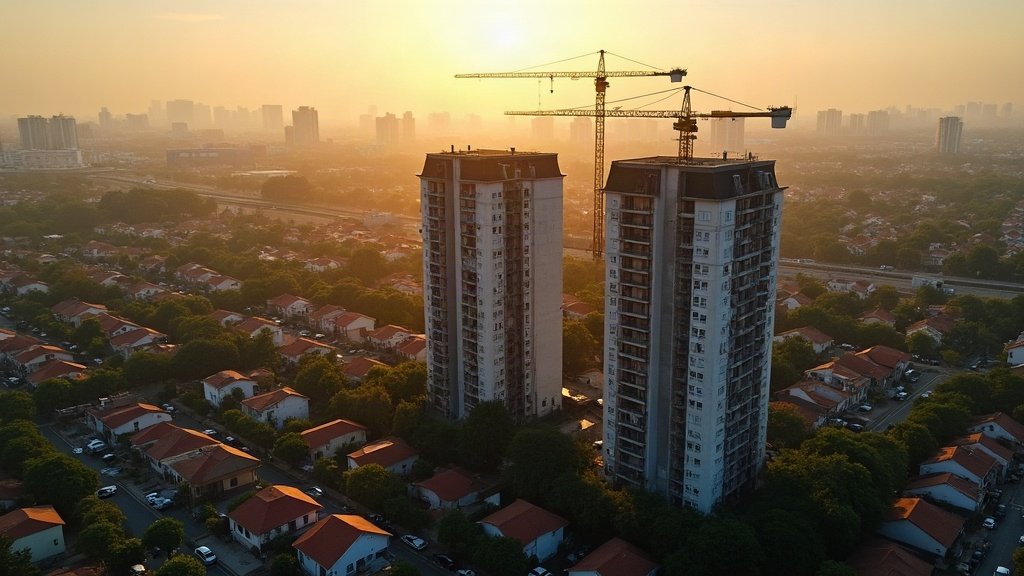
Nga said developers currently rely on booking fees to gauge demand, but that makes it hard to tell serious buyers from casual ones, and buyers risk losing the fee if they pull out, FMT reported. The bigger target is abandoned projects. A developer that can see firm demand before it commits to construction is less likely to start a project it cannot finish. KPKT says it has revived 1,726 sick and abandoned private housing projects worth RM158 billion as of August 2026, and the government's target is zero sick projects by 2030, according to EdgeProp.
The idea is not brand new. Nga first announced an OTP clause on 8 May 2026 as part of the proposed Real Property Development Bill (Bernama), the law meant to replace the Housing Development (Control and Licensing) Act 1966. What is new this week is the shape of it: the 5% ceiling, the interest on refunds and the price guarantee.
No start date, so today's booking rules still apply
The ministry has not given a start date or a detailed framework, and the mechanism is still under study. Until a law or regulation is in force, the rules you sign under today are the ones that apply. If you are booking a unit this month:
- Ask in writing whether the booking fee is refundable, and on what conditions.
- Get the indicative price for your specific unit on paper.
- Ask the bank for a loan assessment before you sign the SPA, not after.